







Why Custom Snakeskin Shoes Are Worth the Effort
Off-the-shelf shoes are made for an average foot — but average feet don't actually exist. One foot is often slightly larger than the other. Arches vary. Widths differ. A custom pair of snakeskin shoes solves all of these problems by being made specifically for your feet.
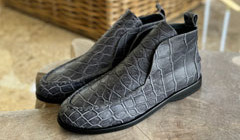
Python shoes are an investment in luxury, comfort, and style. But even the finest exotic leather cannot compensate for poor measurements. This guide will walk you through exactly how to take your own foot measurements for a custom pair of snakeskin shoes. With 20 minutes of your time, you can ensure your bespoke shoes fit like they were made for you — because they will be.
What You'll Need Before You Start
Before you begin taking measurements, gather these simple tools:
Soft tailor's measuring tape (fabric or vinyl, not metal)
A piece of cardboard or thick paper (larger than your foot)
A pencil or pen
A ruler or straight edge
Notepad and pen to record each measurement
Thin socks (wear the socks you plan to wear with the shoes)
A helper (recommended for accuracy, especially for arch measurements)
Do not wear thick socks or go barefoot unless that's how you plan to wear the shoes. Thin dress socks give the most accurate results for most snakeskin shoe styles.
Understanding the Key Measurements for Custom Shoes
Custom shoes require more than just a length measurement. Here's what each measurement affects:
| Measurement | What It Affects |
|---|---|
| Foot Length | Overall shoe size, toe box position |
| Foot Width | Comfort across the ball of the foot |
| Heel Width | Heel fit, slippage prevention |
| Arch Length | Arch support placement, comfort |
| Instep Girth | Fit across the top of the foot |
| Ankle Girth | Boot fit, ankle support |
| Heel Height (if applicable) | Balance, posture, comfort |
Step-by-Step Guide to Taking Your Foot Measurements
Follow these steps carefully. Measure both feet separately — they may differ slightly. Always use the larger foot's measurements for the final order.
Step 1 — Trace Your Foot
Place a piece of cardboard or thick paper on a hard, flat floor. Sit in a chair with your foot flat on the paper. Have your helper trace around your foot with a pencil held vertically. Keep the pencil tight against your foot. Do not angle it inward or outward. Trace both feet.
Step 2 — Measure Foot Length
Using your tracing, draw a straight line from the tip of your longest toe to the back of your heel. Measure this line with a ruler. This is your foot length. Record in both inches and centimeters.
Record: _____ inches / _____ cm (left foot)
Record: _____ inches / _____ cm (right foot)
Step 3 — Measure Foot Width
On your tracing, find the widest part of your foot — typically across the ball, just behind the toes. Draw a straight line across this point and measure. This is your foot width.
Record: _____ inches / _____ cm (left foot)
Record: _____ inches / _____ cm (right foot)
Step 4 — Measure Heel Width
Find the widest part of your heel on the tracing. Draw a straight line across this point and measure.
Record: _____ inches / _____ cm (left foot)
Record: _____ inches / _____ cm (right foot)
Step 5 — Measure Arch Length
This measurement is taken on your foot, not the tracing. Sit with your foot flat on the floor. Place the end of the measuring tape at the back of your heel. Measure forward to the ball of your foot — the point just behind your toes where your foot bends naturally.
Record: _____ inches / _____ cm (left foot)
Record: _____ inches / _____ cm (right foot)
Step 6 — Measure Instep Girth
Stand with your foot flat. Wrap the measuring tape around the highest point of your instep — the curved top of your foot just before your ankle. The tape should go across the top of your foot and under the arch. Keep it snug but not tight.
Record: _____ inches / _____ cm (left foot)
Record: _____ inches / _____ cm (right foot)
Step 7 — Measure Ankle Girth (for boots or high-top shoes)
Stand with your foot flat. Wrap the measuring tape around your ankle at the narrowest point, just above the ankle bones.
Record: _____ inches / _____ cm (left foot)
Record: _____ inches / _____ cm (right foot)
Additional Measurements for Dress Shoes and Loafers
For loafers, oxfords, and other dress shoes without laces, add these measurements:
Step 8 — Toe Depth
Stand with your foot flat. Measure the height from the floor to the highest point of your toes (usually the big toe).
Record: _____ inches / _____ cm (left foot)
Record: _____ inches / _____ cm (right foot)
Step 9 — Heel-to-Toe Drop (for shoes with heels)
If ordering snakeskin heels or dress shoes with a heel, measure from the back of your heel to the floor along the back of your foot. This helps determine the heel counter height.
Record: _____ inches / _____ cm (left foot)
Record: _____ inches / _____ cm (right foot)
Common Mistakes to Avoid When Measuring
Even small errors can ruin the fit of your custom snakeskin shoes. Avoid these common pitfalls:
| Mistake | Why It's a Problem |
|---|---|
| Measuring while sitting | Your feet spread slightly when standing. Always measure while standing. |
| Wearing thick socks | Thick socks add bulk. Wear the socks you'll wear with the shoes. |
| Measuring only one foot | Your feet may differ. Always measure both and use the larger measurements. |
| Pulling the tape too tight | This gives false measurements. Keep the tape snug but not compressed. |
| Angling the pencil while tracing | Angled pencils create inaccurate outlines. Keep the pencil vertical. |
| Guessing or rounding down | Round up to the nearest 1/8 inch or 0.5 cm. It's easier to adjust a slightly larger shoe. |
How to Submit Your Measurements
Once you have all your measurements recorded, follow these steps:
Step 1 — Organize Your Measurements
Create a clear list like this:
Left Foot
Foot length: _____
Foot width: _____
Heel width: _____
Arch length: _____
Instep girth: _____
Ankle girth: _____
Right Foot
Foot length: _____
Foot width: _____
Heel width: _____
Arch length: _____
Instep girth: _____
Ankle girth: _____
Step 2 — Add Notes About Your Feet
Include any relevant information:
Do you have bunions or hammer toes?
Are your arches high, normal, or flat?
Do you need extra room for orthotics?
Have you had foot surgery?
Do your feet swell during the day?
Step 3 — Include a Photo of Your Tracing (optional but helpful)
Take a clear photo of your foot tracings with a ruler placed next to them for scale. Send this along with your measurements.
Step 4 — Choose Your Style and Leather
Let us know which snakeskin shoe style you prefer:
Oxfords
Loafers
Boots (ankle, chukka, or tall)
Sneakers
Heels or pumps
Sandals
Select your leather finish: matte or glossy. Choose your lining: eco-suede or soft lambskin. Pick your hardware color: gold, silver, or custom.
How Long Does Custom Shoe Production Take?
| Stage | Time |
|---|---|
| Pattern making based on your measurements | 2–3 days |
| Leather cutting and preparation | 1–2 days |
| Hand stitching and assembly | 5–7 days |
| Lasting and finishing | 2–3 days |
| Quality control and packaging | 1 day |
Total turnaround: 10–14 business days
Shipping to the United States takes approximately one week via FedEx.
Why Choose Snakeskin for Custom Shoes
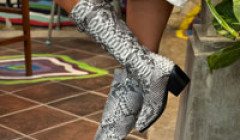
Snakeskin is an exceptional choice for custom footwear. Here's why:
Flexibility — Python leather is naturally supple and molds to your foot shape over time, creating a personalized fit that improves with wear.
Durability — Despite its elegant appearance, snakeskin is remarkably strong and resistant to cracking when properly cared for.
Lightweight — Python leather is much lighter than cowhide or crocodile, reducing fatigue during long wear.
Unique Pattern — Each snakeskin shoe features a one-of-a-kind scale pattern. Your custom shoes will be truly unique.
Breathability — Snakeskin allows air circulation, keeping your feet more comfortable than synthetic materials.
Frequently Asked Questions About Custom Snakeskin Shoes
How do I know if my measurements are correct?
Double-check each measurement. If possible, have a second person verify them. Compare your foot length to a standard shoe size chart as a sanity check — but remember that custom measurements override standard sizing.
What if my feet are different sizes?
This is very common. Always provide measurements for both feet separately. We will make each shoe to fit its specific foot.
Can I order custom snakeskin shoes if I have wide feet?
Absolutely. Custom shoes are the best solution for wide feet, narrow feet, or any non-standard shape. Provide accurate width and girth measurements.
How should my custom shoes fit when they arrive?
They should feel snug but not painful. Snakeskin will stretch slightly and mold to your feet with wear. If they are too tight, they will loosen. If they are too loose, they will not tighten.
What is your return policy for custom shoes?
Because custom shoes are made specifically for you, they are not eligible for return unless there is a manufacturing defect. That's why accurate measurements are so important.
Can I order custom snakeskin shoes as a gift?
Yes, but you will need the recipient's measurements. Consider giving a gift certificate for custom shoes instead — then they can provide their own measurements directly.
Final Thoughts — Your Perfect Fit Awaits
Ordering custom snakeskin shoes by individual measures is a simple process that delivers extraordinary results. With accurate measurements, you'll receive shoes that fit perfectly, look stunning, and feel comfortable from the very first wear.
Take your time with the measurements. Double-check each number. And when you're ready, send us your details. Your perfect pair of snakeskin shoes is just a few weeks away.
Leave a comment